Domaine de la Pépière 2021
A crisp, saline Muscadet: it meets the brine without covering it.
Drinking window 2023 to 2027, peak 2025, it is now 2026.
A good pairing rests on a few simple rules. Once they become habits, you stop thinking about them. Here they are, with everyday examples. And on the evenings when you'd rather not think at all, Bouchons looks through your cellar for the bottle that goes with the dish.
Try it: which wine tonight?
Pick a dish: the demo cellar shows you what to open.
1 wine for « Oysters »
A crisp, saline Muscadet: it meets the brine without covering it.
Drinking window 2023 to 2027, peak 2025, it is now 2026.
The first thing to look at is weight. A light dish calls for a light wine, a rich dish wants a wine with some body. This rule prevents most mistakes: a big, structured red flattens a delicate sole, and a small, crisp white disappears next to a beef stew that has simmered for four hours.
To judge how heavy a dish is, look at the cooking method and the sauce more than the main ingredient. A plain roast chicken is light. In a cream and morel sauce it becomes rich and wants a fuller white, a white Burgundy for instance. Grilled fish with lemon goes towards a taut white; with a butter sauce, it can take a rounder wine.
On the wine side, weight shows in the alcohol, the texture and the concentration. Muscadet, Gamay and Pinot Noir are light. A Médoc, a northern Rhône Syrah or an oak-aged Chardonnay have more body. Put the two weights side by side and half the choice is made. After that, think about the bottle's age: at its peak, a wine often has softer tannins, and the match changes (see the drinking window).
Acidity is your best friend. A fresh wine cleans the palate between bites and cuts through fat. That's why duck breast, raclette or rillettes get on so well with a Gamay or a white from Savoie. Remember one thing: the wine should be at least as acidic as the food. A salad with vinaigrette or fish with lemon makes a soft wine taste flat.
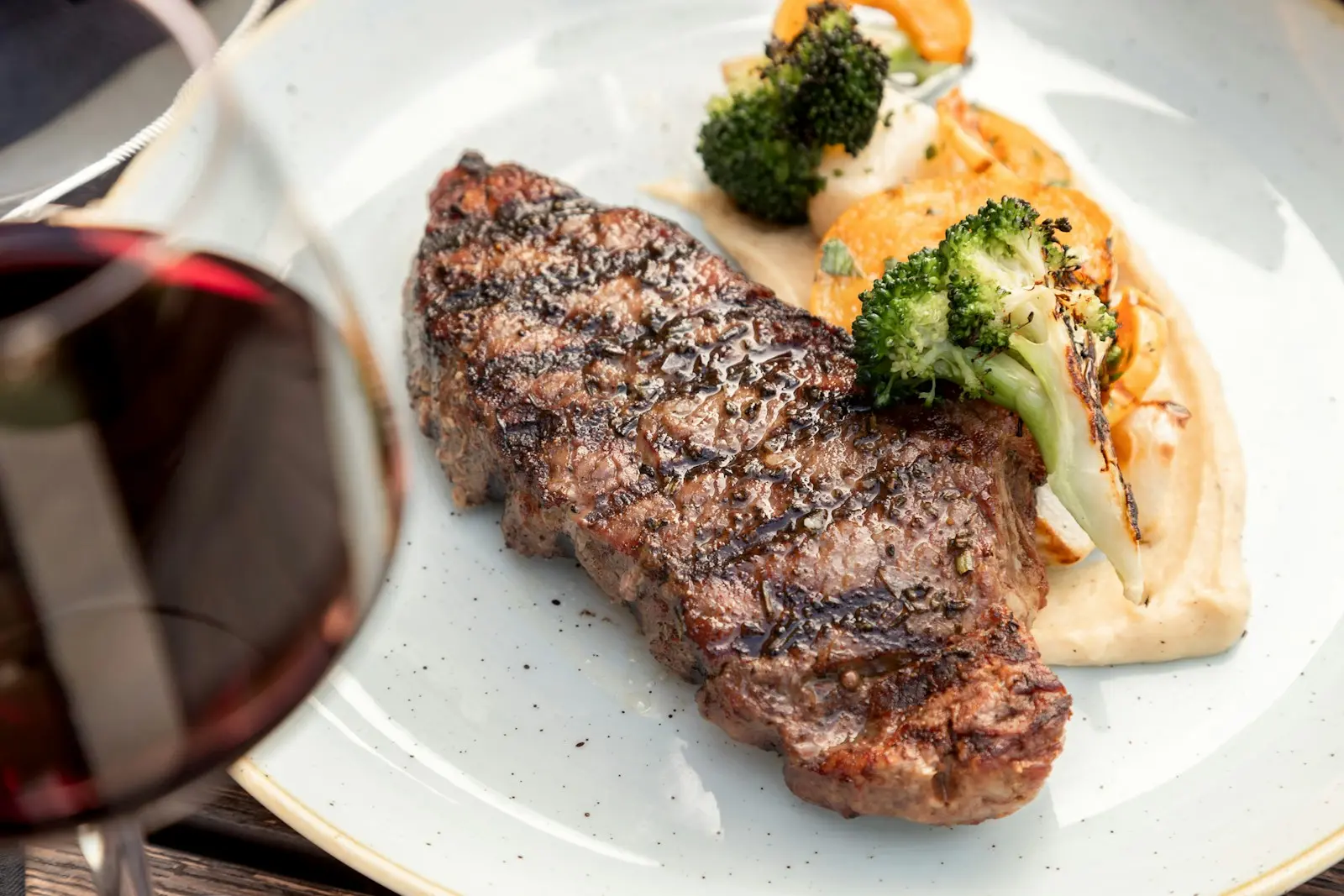
Fat calls for acidity or tannins. Tannins, that slightly drying feel of young reds, soften on contact with protein and fat. With a grilled rib steak, a young Bordeaux tastes smooth; on its own, it would seem harsh.
Sugar is simple to handle: the wine must be at least as sweet as the dessert, or it will taste sour. A lemon tart can take a light sweet wine or an off-dry sparkling wine, never a brut. Sugar also helps with spice: a Riesling or a Gewurztraminer with a touch of sweetness calms a hot curry.
Tannins need the most care. With fish they leave a metallic taste; with chilli they make the burn stronger; with eggs they turn hard. For those dishes, choose a white, a rosé or a low-tannin red served cool, such as a Beaujolais. With red meat, firm tannins are welcome.
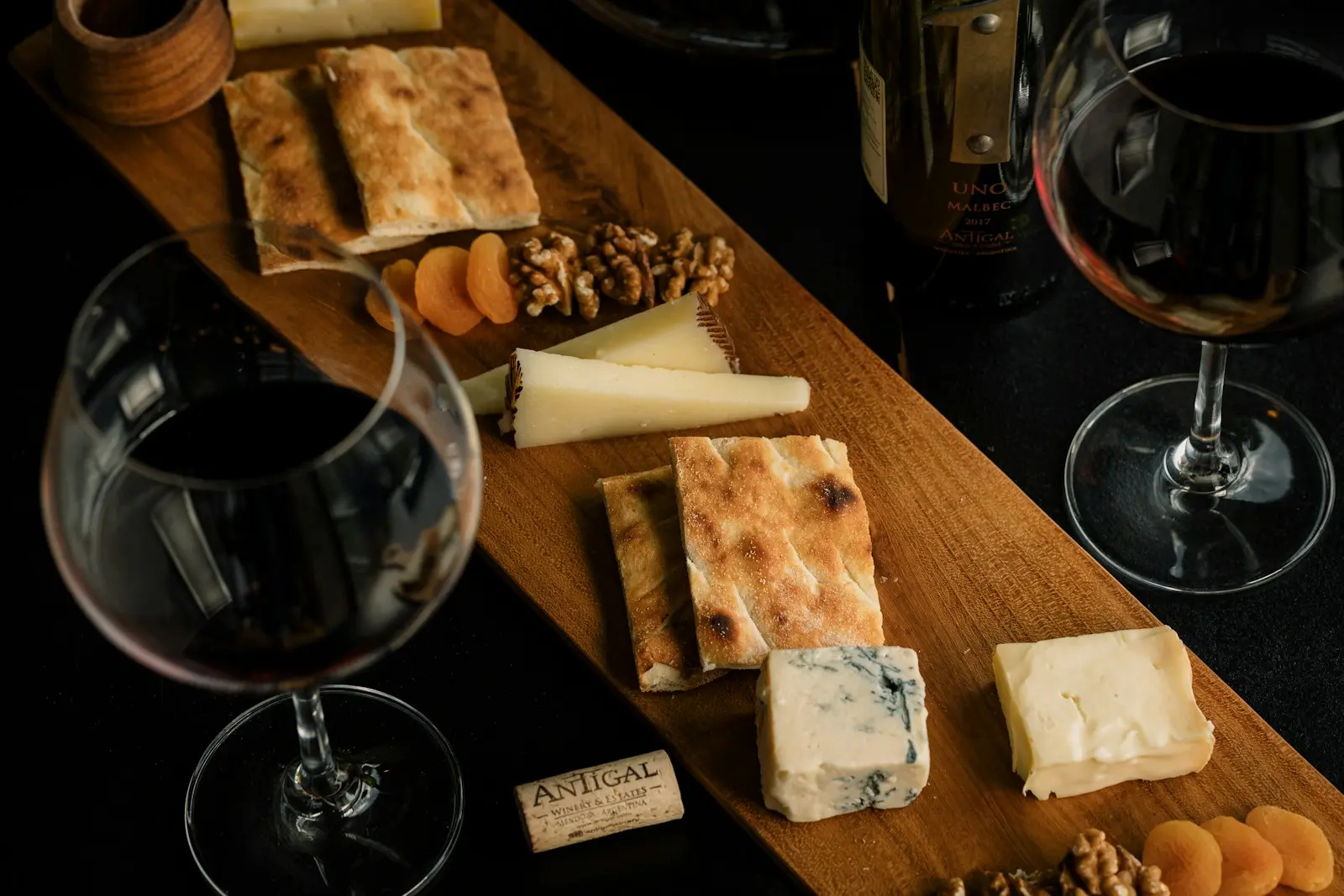
When you're unsure, a regional pairing almost always works: the dishes and wines of one place grew up together. Oysters and Muscadet, choucroute and Riesling, cassoulet and a red from the South-West, bouillabaisse and Provence rosé, Comté and a wine from the Jura, andouillette and Chablis. Centuries of meals have worn them in.
Treat them as a starting point. Dishes travel, and so does your cellar. A Loire goat's cheese goes with Sancerre, and just as well with a Sauvignon Blanc from elsewhere that has the same liveliness. Look for the qualities of the classic match (here, acidity and a mineral edge) in a bottle you actually have at home.
For cuisines from further away, use the four levers rather than a map. A spicy, fragrant Thai dish wants an aromatic white, with little oak and a little residual sugar. Sushi goes towards a dry, saline white, or Champagne. A tagine with dried fruit can take a supple, sunny red from the South.
Temperature matters as much as the bottle. A red served too warm tastes heavy and alcoholic; a white served too cold loses its aromas. Aim for 8 to 10 °C for a crisp white, 12 °C for a fuller white, 14 °C for a light red such as Beaujolais and 16 to 17 °C for a more structured red. If you serve several wines during a meal, go from the lightest to the most powerful and from the driest to the sweetest: each wine then prepares the next without overpowering it.
You rarely start from a blank page. Either the menu is set and you need the bottle, or the cellar decides: a bottle is reaching its peak and you look for something to cook around it. Bouchons helps either way.
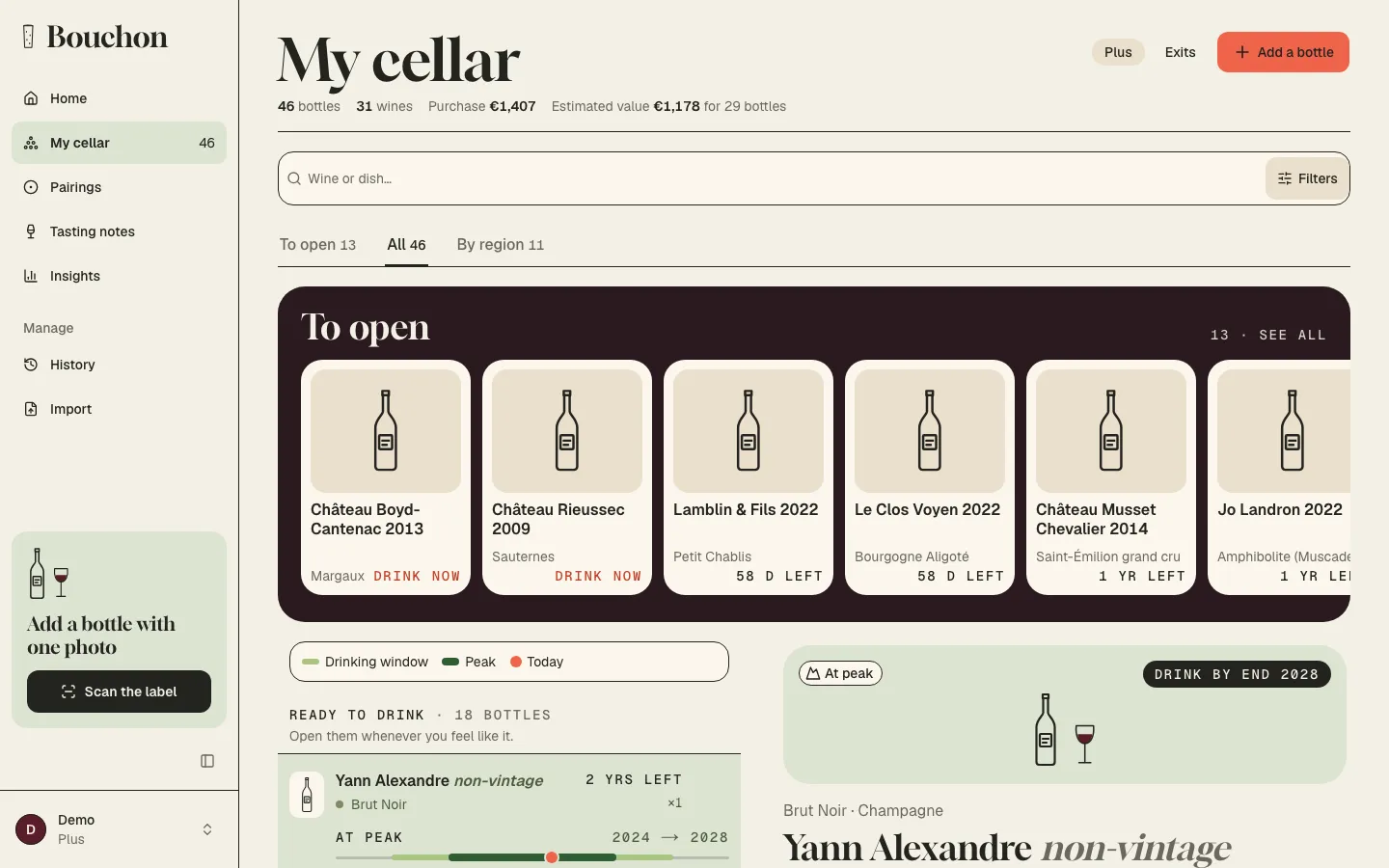
Start from the dish. In My cellar, type the dish in the « Wine or dish… » field: duck breast, chicken casserole, cheese board. Bouchons understands several hundred ways of writing a dish and links them to its catalogue. Your cellar then keeps only the bottles that match, each with a sentence saying why, still sorted by urgency: the one to open soon comes first. Results show up straight away.
Start from the cellar. Every bottle carries its suggested pairings, worked out when you add it, from the producer, the appellation, the vintage and the colour. You can edit them, add more or remove some. On the home screen, the bottles to open first show their pairings, so dinner is settled at a glance. To add your bottles quickly, see label scan and import; for everything else, cellar management.
All of this is included in the free plan, up to the bottle limit shown on the pricing page.
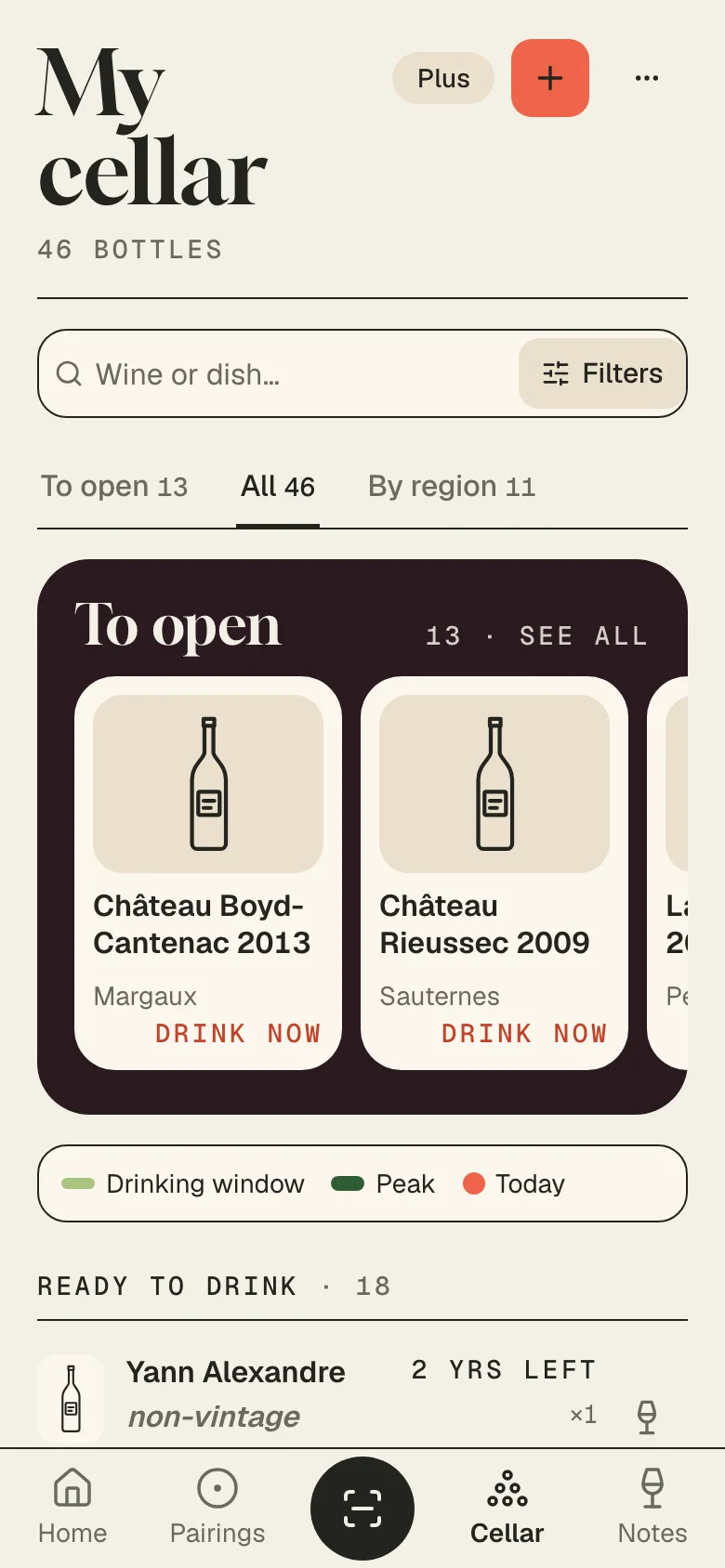
When you add a bottle, Bouchons suggests the dishes that go with it. A pairing can be edited or removed in one tap.
« Duck », « curry », « cheese »: your cellar now shows only the bottles that fit, each with its reason.
Bottles stay sorted by their ideal moment. The one that shouldn't wait any longer comes first.
Free up to 10 bottles. No credit card.